SF Home Prices in 2026: What Buyers Need to Know Before Making an Offer

San Francisco home prices have moved higher in 2026 while available inventory has declined. Buyers are facing short marketing periods, multiple offers, and greater competition for well-located homes.
The citywide market does not tell the entire story. Pricing varies significantly by neighborhood, property type, condition, lot size, parking, views, building quality, and offer terms.
This guide summarizes the 2026 market using current citywide data and neighborhood figures for Noe Valley and Pacific Heights. Confirm current pricing with a property-specific real estate market analysis before submitting an offer.
San Francisco Home Prices in 2026
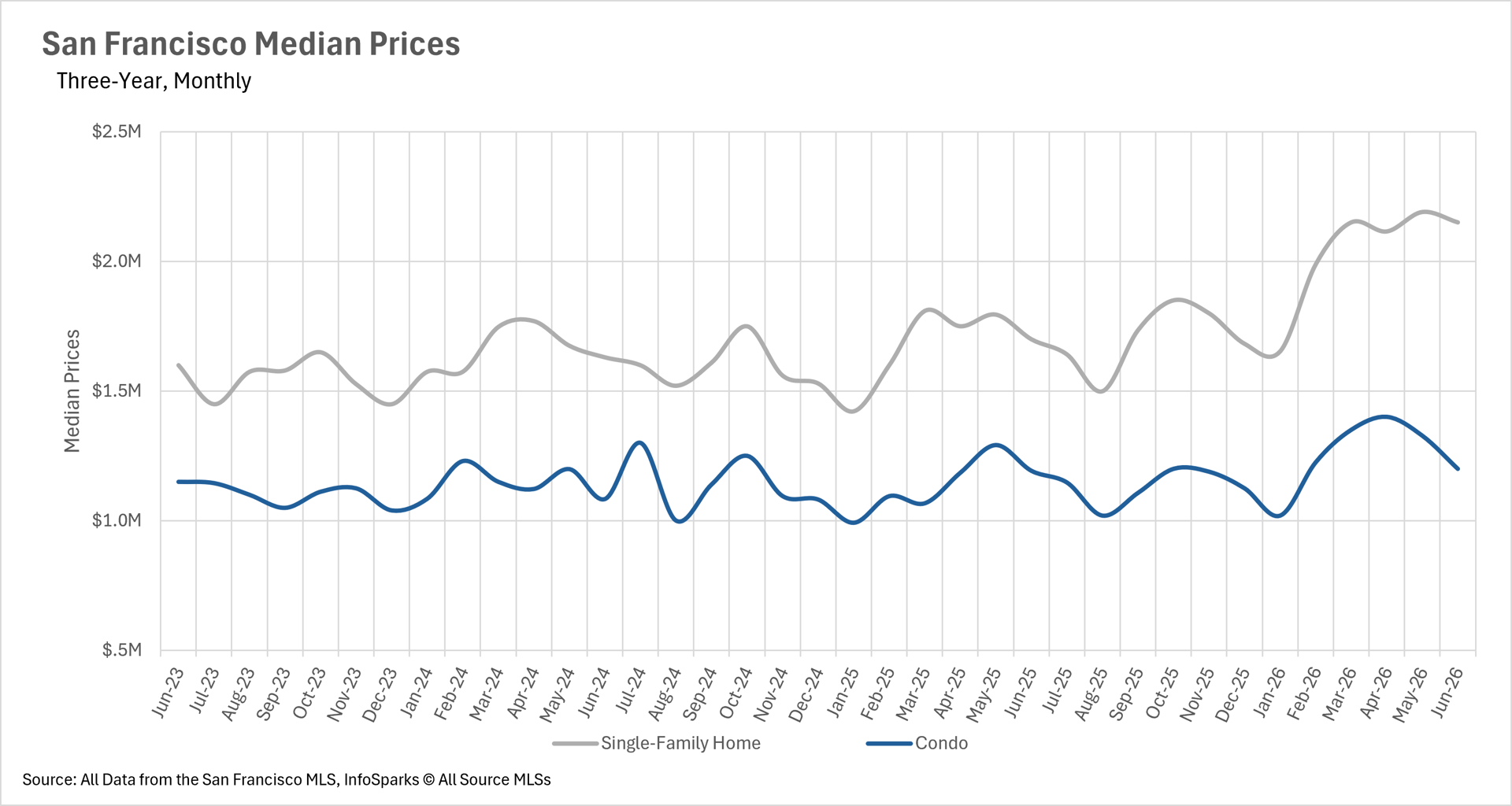
Recent 2026 market reports place San Francisco’s citywide median sale price in the mid-$1.6 million range.
| Market measure | 2026 reference point |
|---|---|
| Citywide median, all property types | Approximately $1.65M–$1.70M |
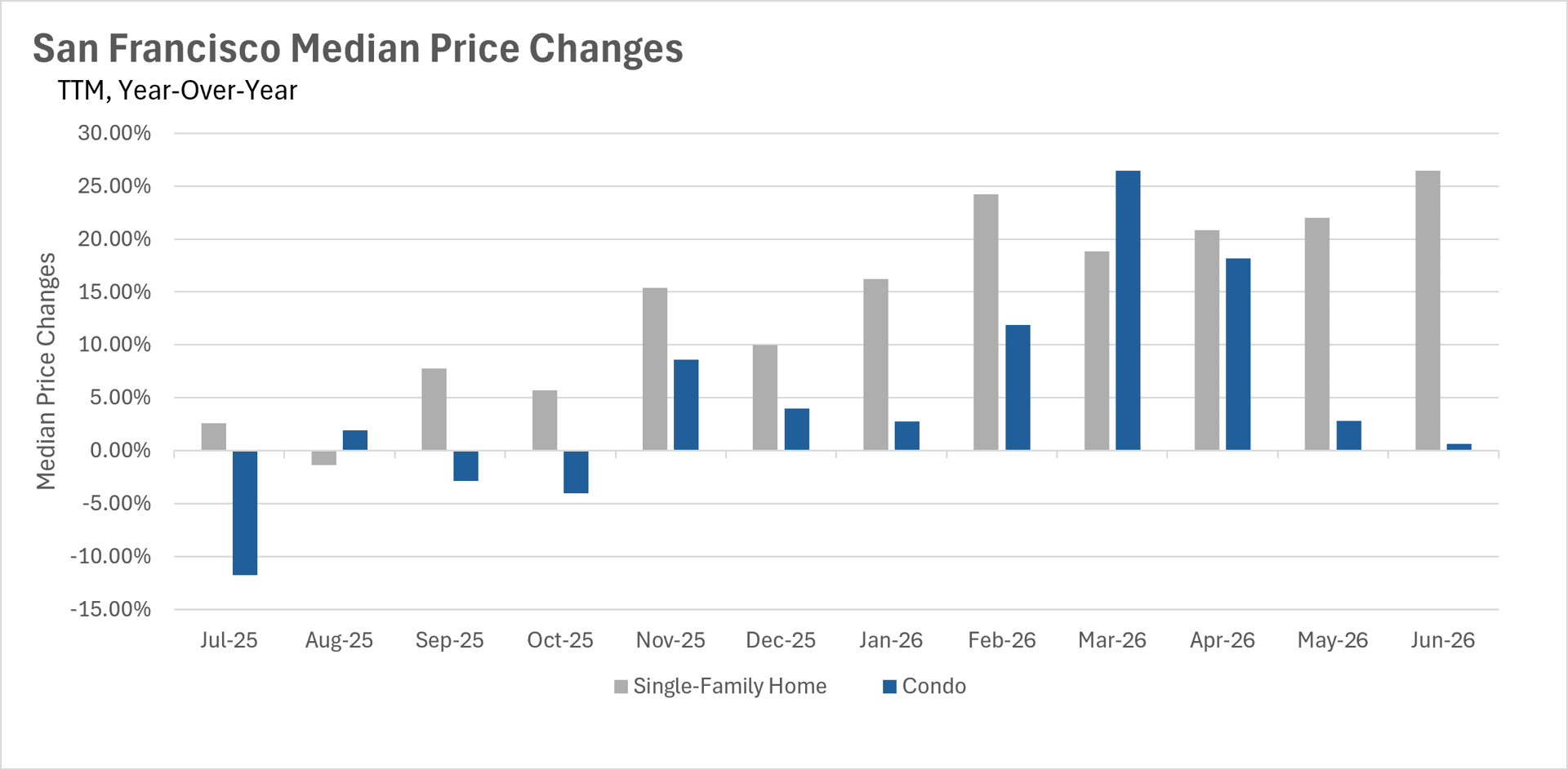
| Single-family median | Approximately $2.15M |
| Condo median | Approximately $1.20M–$1.35M |
| Single-family inventory, June/July reporting | Approximately 135 listings |
| Single-family months of supply | Approximately 0.7 months |
| Average single-family days on market | Approximately 12 days |
| Average condo days on market | Approximately 23 days |
The Redfin San Francisco housing market report and the July 2026 San Francisco market report provide additional citywide data.
The figures indicate a market with:
- Limited supply, particularly for single-family homes.
- Strong demand in established neighborhoods.
- Rapid movement for properly priced properties.
- A wide difference between condo and single-family pricing.
- Greater importance placed on offer certainty.
The median is a reference point. It is not a recommended offer price. A remodeled two-bedroom home, a fixer, a top-floor condo, and a large single-family property may all sell far above or below the median.
Noe Valley Real Estate: Approximately $2.88 Million
The 2026 median reference point for Noe Valley real estate is approximately $2.88 million. Buyers should confirm whether a specific report includes all property types or focuses primarily on single-family homes.
Noe Valley pricing reflects demand for homes with several features:
- Larger floor plans.
- Outdoor space.
- Parking or garage access.
- Updated kitchens and baths.
- Access to neighborhood retail and transit.
- Family-sized layouts.
- Limited replacement inventory.
A median near $2.88 million does not mean every home in the neighborhood is priced at that level. Buyers may find smaller condos, TIC interests, and homes needing substantial work at lower prices. Renovated single-family homes with parking, usable outdoor space, and strong natural light may trade materially higher.
Review the Noe Valley neighborhood page for local information and current search access.
What $2.88 Million Means for Buyers
At this price point, buyers should evaluate total acquisition cost rather than only the purchase price.
Budget for:
- Down payment.
- Monthly principal and interest.
- Property taxes.
- Homeowners insurance.
- HOA dues, when applicable.
- Maintenance and future capital projects.
- Inspection-related repairs.
- Closing costs.
- Potential appraisal shortfall.
A buyer with a budget below the Noe Valley median may need to adjust one or more search criteria:
- Condo instead of single-family.
- Smaller square footage.
- Limited or no parking.
- More renovation work.
- A less central block.
- A neighboring district with similar access and housing characteristics.
Buyers searching for homes for sale in Noe Valley should compare active listings with recent closed sales. List price alone is not a reliable indicator of market value.
Pacific Heights San Francisco Real Estate: Approximately $6.88 Million
The 2026 median reference point for Pacific Heights San Francisco real estate is approximately $6.88 million. Pacific Heights contains a broad range of property types, including luxury single-family residences, condominiums, cooperative interests, and historic buildings. The exact median will vary based on the reporting period and the properties included.
The neighborhood’s pricing is influenced by:
- Historic architecture.
- Building scale and lot size.
- Views and exposure.
- Elevator access.
- Garage and parking configuration.
- Renovation quality.
- Building systems.
- Outdoor space.
- Block-by-block location.
A Pacific Heights buyer should not compare every property with the neighborhood median. A condominium with monthly dues and limited parking has a different value profile from a detached residence with a garage, garden, elevator, and views.
Review the Pacific Heights neighborhood page for local information and current listing access.
What These Medians Mean at Different Price Points
Below $1.5 Million
This range is generally more compatible with:
- Smaller condominiums.
- Units in larger buildings.
- Properties requiring updates.
- Areas outside the most expensive neighborhood segments.
First-time buyers should focus on monthly payment, reserves, HOA finances, and building condition. A lower purchase price does not eliminate the need for a full financial review.
$1.5 Million to $3 Million
This range may provide access to:
- Larger condos.
- TIC properties.
- Smaller or less updated single-family homes.
- Entry-level properties in Noe Valley, depending on condition and location.
Competition can still be significant. Buyers should be prepared to act quickly when a property is correctly priced.
$3 Million to $5 Million
This range may improve access to:
- Noe Valley single-family homes.
- Larger condominiums.
- Renovated homes with parking.
- Properties with outdoor space or additional flexible rooms.
At this level, condition and layout can create substantial differences in value. A detailed comparison of recent sales is required.
$6 Million and Above
This is the primary range for many Pacific Heights single-family opportunities, although individual homes may sell significantly above or below the neighborhood median.
Buyers should expect more detailed review of:
- Proof of funds.
- Financing structure.
- Building and system condition.
- Historic status.
- Insurance availability.
- Renovation history.
- Closing timeline.
- Confidentiality and transaction coordination.
Offer Strategy in a Low-Inventory Market
A competitive offer is not defined by price alone. Sellers generally evaluate the combined risk, timing, and certainty of each offer.
1. Complete financing preparation first
Obtain a current preapproval before touring seriously. A fully reviewed approval is stronger than a basic prequalification.
Discuss:
- Maximum purchase price.
- Monthly payment at current rates.
- Down payment options.
- Reserve requirements.
- Jumbo loan requirements.
- Rate-lock timing.
- Appraisal risk.
Use the Bill Wagner Realtor mortgage calculator as an initial planning tool. Confirm final terms with a licensed lender.
2. Use closed comparable sales
Base the offer on recent closed sales with similar:
- Property type.
- Square footage.
- Lot size.
- Condition.
- Parking.
- Outdoor space.
- Building characteristics.
- Micro-location.
Online estimates may not reflect recent neighborhood changes or the value of property-specific improvements.
3. Set a maximum before negotiations
Define a walk-away number before reviewing competing offers. Include the projected monthly payment and cash reserves in the decision.
Do not increase the offer solely because another buyer may be competing. The maximum should reflect value and financial capacity.
4. Make terms clear and reliable
Depending on the property and buyer qualifications, an offer may be strengthened by:
- A meaningful earnest money deposit.
- A closing date that matches the seller’s needs.
- Clear documentation of funds.
- A short, realistic contingency schedule.
- A lender who can respond quickly.
- A pre-inspection when permitted.
- Appraisal gap planning when appropriate.
Contingencies should not be removed without understanding the risk. Inspection, financing, appraisal, title, and disclosure issues can create material financial exposure.
5. Consider escalation clauses carefully
An escalation clause may be useful when multiple offers are expected. It should include:
- A defined starting price.
- A clear increment.
- A maximum cap.
- Verification requirements.
- A defined competing-offer process.
The clause should be reviewed with the buyer’s agent and legal or lending professionals as appropriate.
First-Time Home Buyer Tips for San Francisco
San Francisco pricing creates additional planning requirements for first-time buyers.
Use this checklist:
- Confirm the full monthly housing cost.
- Review property taxes and insurance.
- Understand HOA dues and reserves.
- Investigate building maintenance history.
- Review disclosures before removing contingencies.
- Confirm parking and storage rights.
- Check whether the property is a condo, TIC, co-op, or single-family residence.
- Maintain cash reserves after closing.
- Avoid assuming future refinancing will solve affordability.
- Compare the total cost of renovation with the cost of a move-in-ready property.
A buyer may qualify for a purchase price that is not comfortable over the long term. Qualification and affordability are different calculations.
Why Local Neighborhood Knowledge Matters
San Francisco values can change within a few blocks. A local agent can help interpret factors that broad market data does not capture.
Relevant local analysis includes:
- Which listings are deliberately underpriced.
- Which recent sales are truly comparable.
- Whether a home is likely to attract multiple offers.
- How sellers are responding to contingencies.
- Whether a property has unresolved permit or building issues.
- How parking, slope, views, and outdoor space affect value.
- Whether a condominium association is financially stable.
- Whether a property’s condition justifies the asking price.
- Which opportunities may be available before broad marketing.
Bill Wagner Realtor provides local market guidance through REAL Brokerage. Bill Wagner is a California Realtor with license ID DRE#00815652.

Next Steps for 2026 Buyers
Before making an offer:
- Select the target neighborhood and property type.
- Confirm financing and cash reserves.
- Review current closed comparable sales.
- Identify the property’s condition and risk factors.
- Establish a maximum offer.
- Prepare documentation of funds.
- Review disclosure and contingency options.
- Submit a clear offer on the required timeline.
For a neighborhood-specific analysis, use the evaluation request or contact Bill Wagner Realtor at +1 (415) 598-5823.
Data note: Market figures are based on 2026 reports available as of August 2026 and neighborhood reference figures of approximately $2.88 million for Noe Valley and $6.88 million for Pacific Heights. Median prices vary by source, property type, reporting period, and sample size. Information is provided for general educational purposes and is not financial, tax, legal, or appraisal advice. Verify current data and transaction terms with appropriate licensed professionals before acting.